
Systems don’t change children’s lives.
People do.
We develop the leaders and the wider workforce this work needs—people who can think and act across institutions, not only within them.
WHERE WE START:
Less heroic, more civic.
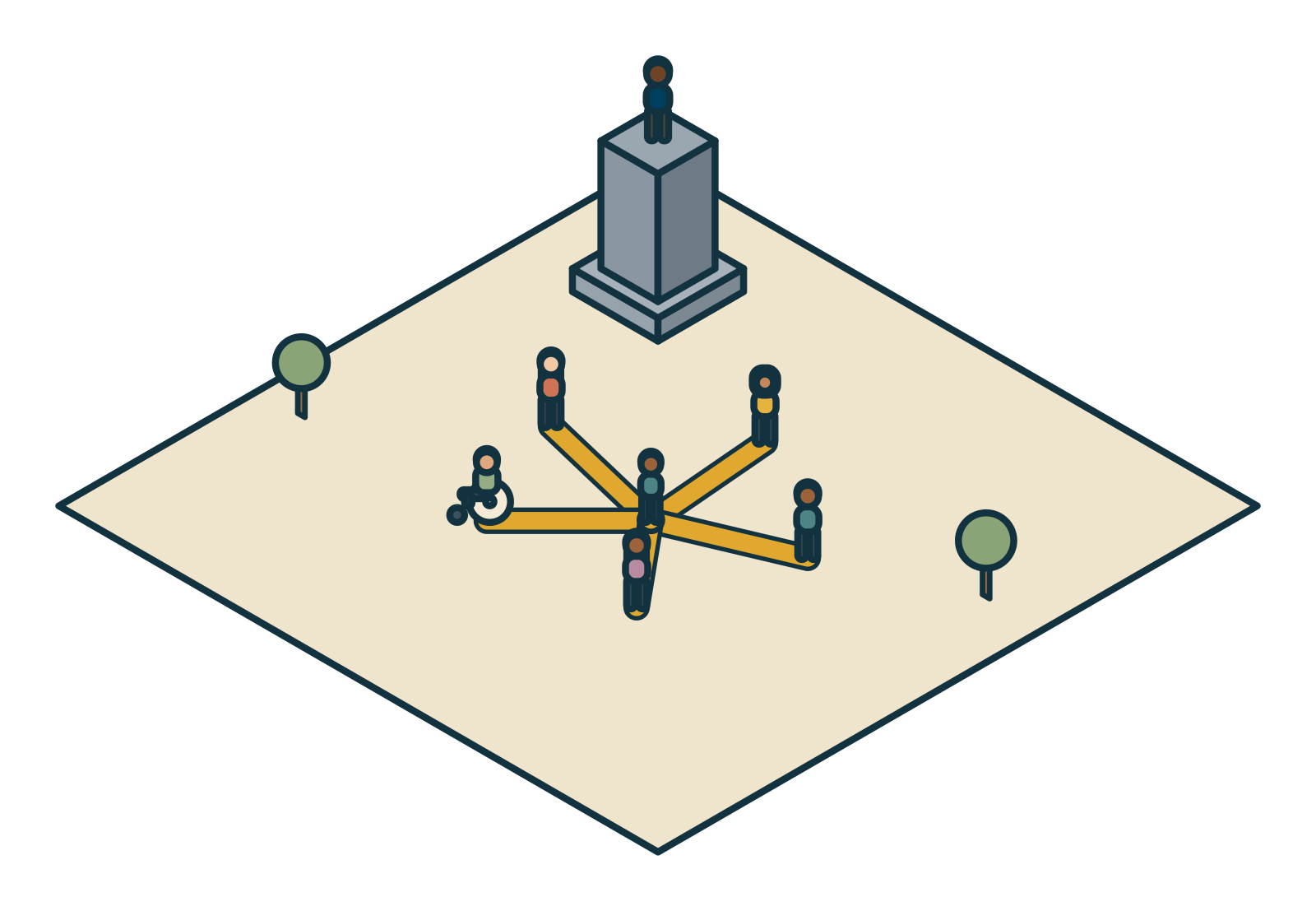
For decades, the answer to hard problems in education has been heroism—the exceptional head who beats the system so their children can beat the odds. It's remarkable, and it isn't a plan.
The leadership this work needs is civic, not heroic: leaders who change the odds for every child, not only the ones lucky enough to find a hero. That's a different craft, and it can be learned.
And it’s not just about senior leaders.
A childhood is held by a whole workforce—teachers, early years practitioners, youth workers, family support workers, the people who see children every day. Coherence is built by everyone around a child, not just the person at the top.
WHAT WE DO:
Our programmes
This is where we build the capacity that makes everything else possible. We work with individuals, with cohorts of peers, and with whole institutions—developing the people so they go on to change the conditions around children in their own places. When it works, the effect outlasts any programme, because it lives in the people who carry it.

The 100s
For aspiring headteachers.
Our flagship school leadership development programme, running region by region: the South West, Yorkshire, West Country, the East of England and Greater Manchester.
Over five years, each region identifies and nurtures around 100 headteachers, giving school leaders the space, tools and peers to take on the long-term challenge of building better support for children in their own place.
LeadingTrusts
For aspiring school trust CEOs.
A national programme for aspiring CEOs—the rare space to step back from daily pressures and focus on their own growth and their organisation's. Through structured inquiry and peer challenge, trust leaders strengthen the habits that let them lead change that is coherent, connected and consistent for the communities they serve.
Centre for the Children’s Workforce
For places.
A new higher education institution, developed with the University of East London, with its first degree launching in 2026/27. It builds new routes into and through the professions that serve children—education, social care, youth work, SEND and beyond—so people can study while they keep working, creating the respected, connected pipeline a workforce too often fragmented and undervalued has lacked.