
Notes from the places doing this work.
What we're learning, as we learn it, from the neighbourhoods and schools building cradle-to-career support.
Staking the ground
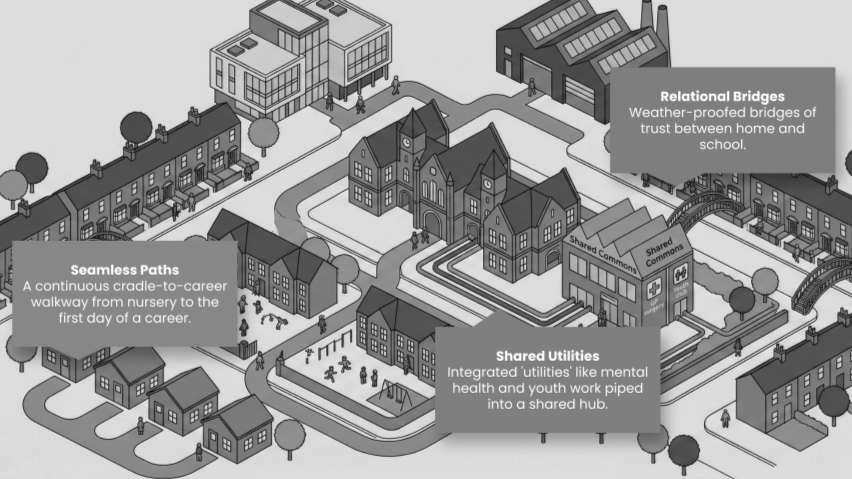
We have the ‘software’ to transform children’s lives, but we are trying to run it on fragmented ‘hardware’. In this follow-up article, Sam moves from the ‘why’ to the ‘where,’ arguing that the “postcode cluster” is the essential architectural unit for systemic change.
The mismatch: When vertical systems meet horizontal lives
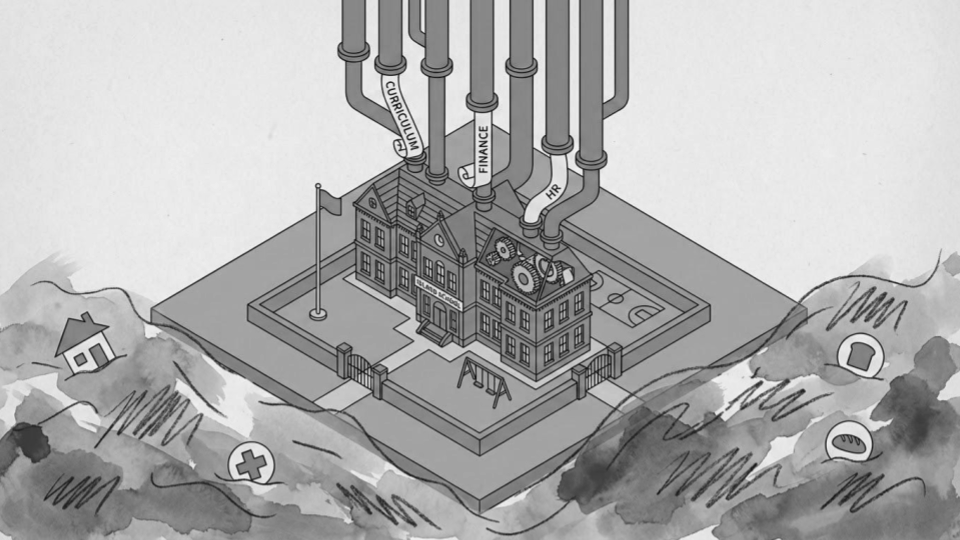
Imagine a school that is nailing it. The curriculum is perfectly sequenced, the culture is warm and demanding, the internal machine hums with clinical efficiency. Yet, despite this rigour, some metrics are moving in the wrong direction. In this article, Sam argues that we are witnessing a structural mismatch: our institutions are engineered for vertical accountability while our children live horizontal lives, before hinting at what an alternative might look like.

The relational estate
We spend millions maintaining our buildings because we know the cost of a leaking roof. In this article, Jamesasks: What if we treated our "relational estate" with the same rigour?

The adaptive turn
If the problem is ecological, can the solution remain isolationist? It isn’t enough to rely on the technical toolkit of trackers and policies. It requires a structural shift. Sam explores the 'adaptive turn'—moving beyond the school gates—to propose an institution that acts as both a fortress for learning and a hub for community connection.

Mapping this moment
Why does leading a school feel heavier right now? It isn’t the familiar burden of accountability, nor even the strain of tightening budgets. It is something else. Using Bronfenbrenner’s ecological map as a lens, Sam traces the root of the "current moment"—from rising poverty to crumbled services—to explore why the classroom is carrying the weight of the world.

Striving for impact
James reflects on what we can learn from two decades of place-based work in the U.S. through the StriveTogether network, interrogating both the promise and the pitfalls of collective impact—and why the next stage of educational reform will depend on leaders who can share responsibility while holding differentiated responsibility.

Making it real: Turning belonging and mattering into daily practice
Mohamed reflects on why mattering isn’t a soft idea but a moral necessity, and what it takes to make it real. Drawing on research and his recent reflections from the Confederation of School Trusts conference, he explores how belonging and mattering move from intention to action, and why this work sits at the heart of flourishing schools.